Call now: 651-703-2336 Request service
Before you go downstairs
Standing water and electricity share the same room in most Minnesota basements. The panel, the furnace, the water heater, the sump, and the freezer are all typically on that floor, and several of them sit at or near the slab.
Do not step into standing water if the electrical panel, outlets, cords, or appliances are in contact with it. Power cannot be assumed off just because the lights are out — a circuit can re-energise when utility power returns or when a generator is connected upstream. If the panel cannot be shut off from a dry location outside the wet area, stay upstairs and call.
Water that came up through a floor drain or a sewer line is a different job again. That is not a wet-vac problem. It requires protective equipment, controlled removal, and disposal of porous materials that cannot be cleaned.
If water is still rising, still entering, or has reached anything electrical, use the call button rather than reading further.
What decides how bad this is
Four things, in roughly this order.
Where the water came from. Clean supply-line water, groundwater through a crack or cove joint, and a sewer backup are three different categories with three different outcomes. Clean water reaching carpet quickly can often be extracted and dried in place. Sewage reaching the same carpet means the carpet leaves the building. The source is not a detail to establish later — it decides what can be saved.
How deep, and how long. Depth tells you what the water touched. Duration tells you how far it wicked. Drywall pulls moisture upward well above the visible water line, and insulation inside the wall holds it long after the surface feels dry. Two inches for an hour and two inches overnight are not the same loss.
What it reached. Bare concrete and sealed slab tolerate water. Carpet pad, drywall, batt insulation, MDF trim, particleboard cabinet bases, cardboard storage, and anything upholstered do not. Finished basements cost more to dry because there is more that holds water and more that has to come out to reach it.
What is in the room. A furnace, water heater, panel, or laundry hookup in the wet zone changes safe entry and can change the order of work. So can stored paint, solvents, or lawn chemicals sitting on the floor.
What should happen, in order
- Keep people and pets upstairs until entry is confirmed safe.
- Stop the source only if it can be reached from a dry route — a main shutoff upstairs, a hose bib outside, a breaker in a dry panel.
- Photograph from the stairs before anything is moved. Insurers ask for the original condition, and the water line is evidence that disappears once drying starts.
- Get water removed. Extraction moves liquid water out far faster than evaporation, and every hour of standing water widens the damage.
- Open the assemblies that hold water. Flood cuts, baseboard removal, and pad removal are how drying equipment reaches the wet material.
- Dry to a measurement, not to a feeling. Moisture meters and daily readings decide when drying is finished.
Why New Brighton basements take water
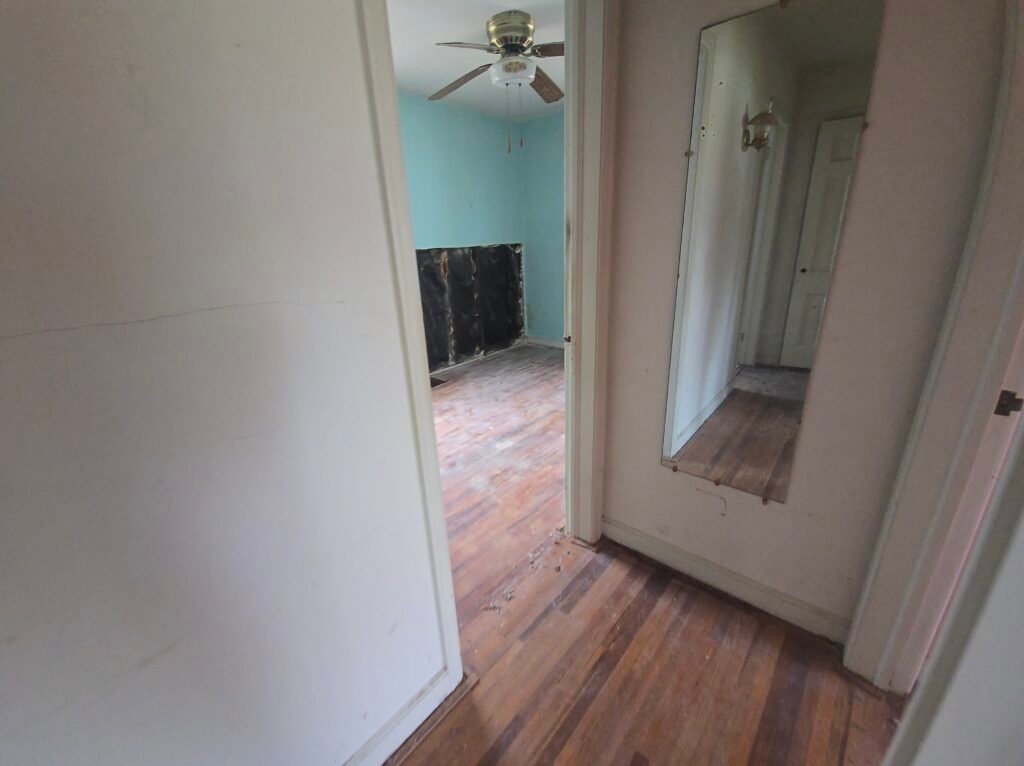
Ramsey County sits on glacial till with significant clay content in many neighbourhoods, and clay does not drain quickly. Saturated soil against a foundation wall creates lateral pressure, and water finds the paths of least resistance: cold joints where the wall meets the floor, shrinkage cracks in poured walls, mortar joints in block, and the gap around any penetration.
The seasonal pattern here is specific. Spring snowmelt arrives while the ground below is still frozen, so meltwater cannot infiltrate and runs along the surface toward whatever is lowest — frequently a foundation. Summer storms deliver more rain in an hour than the surrounding soil can absorb, overwhelming window wells and gutter systems. Winter brings its own version, where a sump discharge line freezes at the outlet and the pump runs against a blocked pipe until it fails.
Older housing stock adds the rest. Downspouts that terminate at the foundation instead of six feet out, grading that has settled toward the house over decades, window wells without functioning drains, and floor drains connected to systems that surcharge during heavy rain.
None of this changes the method. The correct fix still begins with the observed entry path and the measured damage in the individual home — but knowing the regional pattern shortens the diagnosis.
What can usually be saved, and what cannot
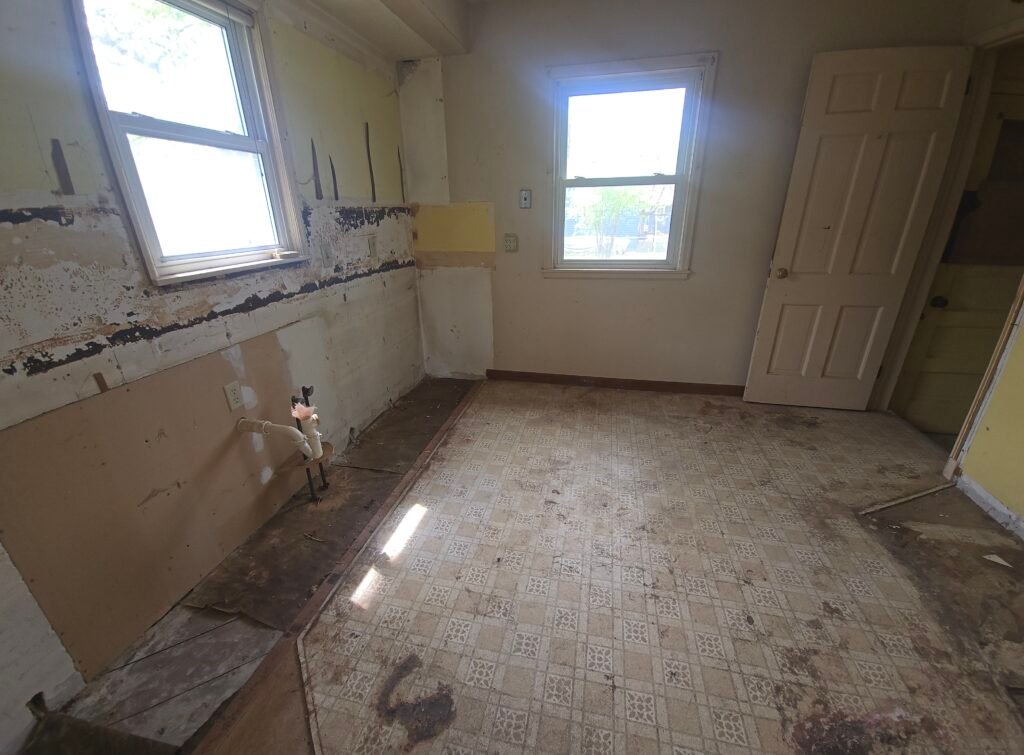
Often salvageable: concrete and masonry, solid wood framing if dried quickly, tile over concrete, metal shelving, sealed plastic containers, and hard-surface furniture.
Usually removed: carpet pad in nearly every case, drywall below the wet line, batt insulation that has been wet, particleboard and MDF, and cardboard.
Depends entirely on the source: carpet, engineered flooring, upholstered furniture, and stored contents. Clean water and fast response make these salvageable. Sewage or outdoor floodwater does not.
Nobody can give you a reliable answer to “is this ruined” from a description. The answer comes from the source, the elapsed time, and a meter reading.
How to choose who does the work
Ask five questions, and judge the answers rather than the marketing.
- How will the basement be made safe before anyone enters?
- How will moisture be mapped, and will readings be documented daily?
- What can reasonably stay, and what has to be removed, and why?
- How will dryness be confirmed at the end?
- What is included — is disposal in the price, is monitoring in the price?
Compare providers on a written scope and clear communication. Be careful with anyone who quotes a firm price before seeing the source and depth, or who cannot explain why a given material is coming out.
One structural point that saves confusion later: mitigation, permanent source correction, and reconstruction are three separate jobs. Drying the basement does not fix the crack that let water in, and neither of those is the same as replacing the drywall.
Ready when you are
Tell us how deep the water got, where it came in, and whether it has stopped. If it is still rising, use the call button.